
Printing Near Me: How to Find the Right Promotional Product Supplier in Australia
Looking for printing near me? Discover how Australian businesses and sports clubs can find the right promotional product supplier and get great results.

Written by
Ned Murray
Buying Guides & Tips
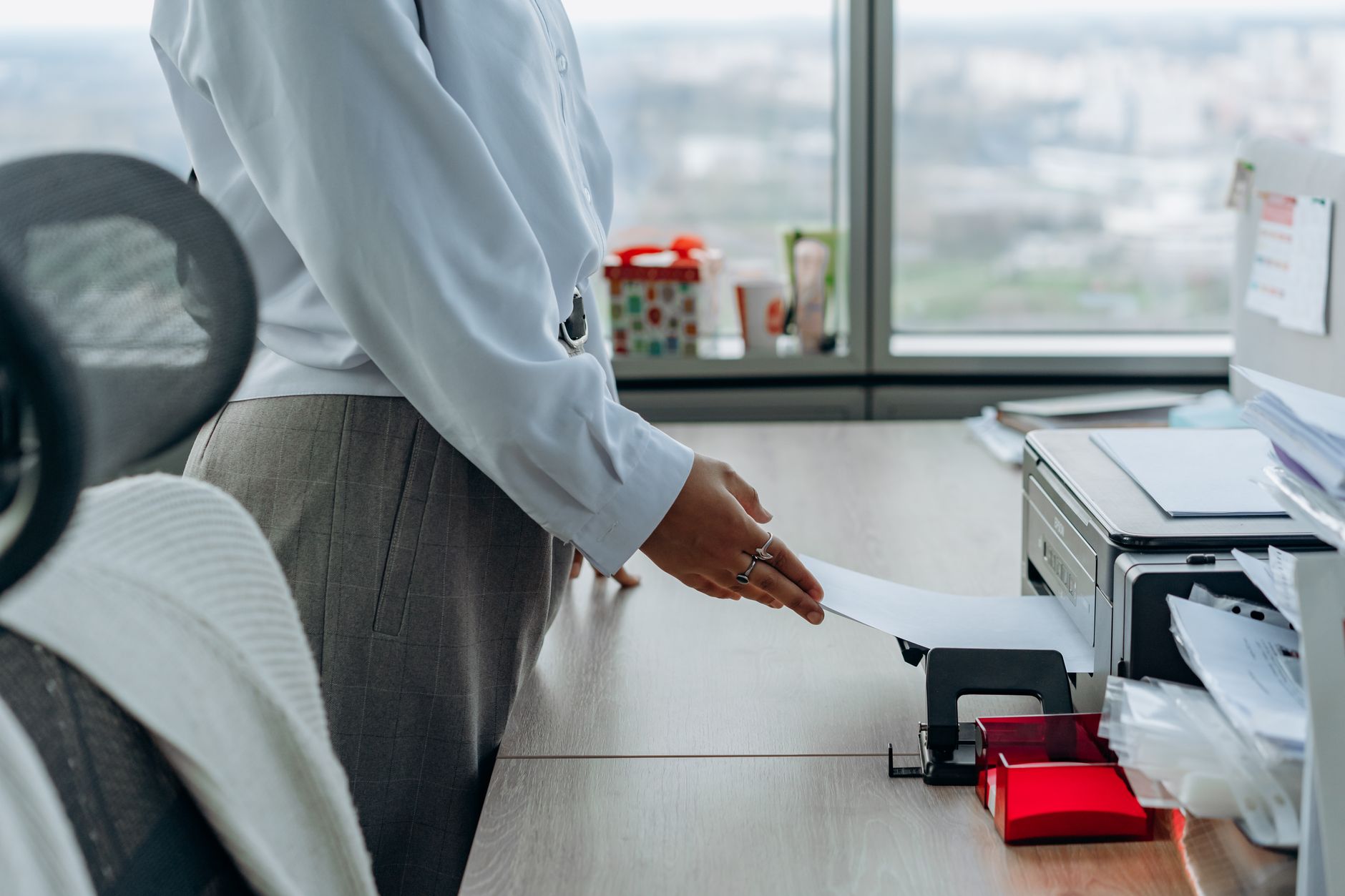
Searching for “printing near me” is one of the most common starting points for Australian businesses, marketing teams, and sports clubs when they need branded merchandise — and it makes complete sense. You want something fast, reliable, and ideally someone who understands what you’re trying to achieve. But here’s the thing: the best printing partner for your promotional products isn’t always the closest one to your office. In today’s market, knowing how to evaluate suppliers, understand decoration methods, and manage your order effectively is far more valuable than simply picking whoever ranks first in your local search results. This guide breaks down everything you need to know to find the right printing and branded merchandise partner — wherever you are in Australia.
Why “Printing Near Me” Often Returns the Wrong Results
When most people type “printing near me” into Google, they’re thinking about promotional products, custom apparel, or branded merchandise for a campaign, event, or team. What they often get back, however, is a mix of local print shops focused on business cards, flyers, and document printing — which is a completely different world.
Promotional product printing requires specialist knowledge. Embroidering a corporate polo shirt is nothing like printing a brochure. Screen printing a run of 200 custom t-shirts for a Gold Coast sporting club requires specific equipment, ink expertise, and artwork setup that most general print shops simply don’t offer.
Understanding this distinction upfront will save you time and frustration. You’re not looking for a print shop — you’re looking for a promotional merchandise supplier who offers decoration services. The two are quite different.
What Makes a Promotional Product Supplier Different?
A specialist promotional merchandise supplier will typically offer:
- Multiple decoration methods — screen printing, embroidery, pad printing, laser engraving, sublimation, heat transfer, and digital printing
- A product catalogue — ranging from apparel and drinkware to bags, tech accessories, and eco-friendly items
- Artwork support — in-house design assistance and artwork file management
- Proof approval processes — physical or digital samples before full production runs
- Bulk pricing tiers — pricing that scales based on quantity ordered
If the “printer near you” can’t tick these boxes, it’s worth widening your search — even if that means working with a supplier based in another city.
The Truth About Local vs. National Suppliers for Branded Merchandise
Many Australian businesses default to local suppliers out of habit or convenience. And there are genuinely good reasons to work locally — faster turnaround on rush orders, easier in-person consultations, and the ability to view physical samples before committing to a large order. A Brisbane marketing team working on a tight deadline might absolutely benefit from a local supplier who can turn around 300 embroidered polo shirts in five business days.
That said, national suppliers — those operating across Sydney, Melbourne, Perth, Adelaide, Canberra, and beyond — often offer advantages that local print shops simply can’t match:
- Larger product ranges — more categories, more colour options, more customisation possibilities
- More competitive pricing — especially at higher quantities, where economies of scale matter
- Stronger freight networks — reliable delivery to regional areas including Darwin, Hobart, and Townsville
- Dedicated account managers — particularly useful for marketing teams managing multiple campaigns simultaneously
For most organisations, the ideal approach is a hybrid one: use a national supplier for your standard ongoing orders, and identify a local supplier for genuine emergencies.
For more detailed guidance on navigating your first order, take a look at our beginner’s guide to ordering promotional products in Australia.
Understanding Decoration Methods Before You Order
One of the biggest mistakes businesses make when searching for printing near me is assuming all decoration methods are the same. They’re not — and choosing the wrong one can result in a finished product that doesn’t look or perform the way you expected.
Here’s a quick overview of the most common decoration methods used in the Australian promotional products industry:
Screen Printing
Screen printing is ideal for high-volume runs of custom t-shirts, tote bags, and other flat fabric items. It produces vivid, durable prints and is cost-effective when ordering 50 units or more. However, it requires separate screens for each colour, so designs with multiple colours can increase setup costs.
A Melbourne football club ordering 150 custom supporter shirts would typically use screen printing for bold, single or two-colour designs on the front and back.
Embroidery
Embroidery is the premium choice for corporate apparel — polos, caps, jackets, and workwear. It adds a professional, tactile finish that screen printing can’t replicate. Minimum order quantities for embroidery are typically lower than screen printing, sometimes as few as 12–24 pieces.
For a deeper dive into choosing between these two methods, read our guide to screen printing vs embroidery for custom apparel.
Pad Printing
Pad printing is commonly used for hard promotional items like branded pens, keyrings, USB drives, and stress balls. It’s a cost-effective way to apply logos to small, irregular surfaces.
Laser Engraving
Laser engraving is the go-to method for awards, metal drinkware, and premium gifts. It creates a permanent, high-contrast mark by removing the surface material. A Perth engineering firm ordering branded stainless steel tumblers would typically request laser engraving for a polished corporate look.
Sublimation
Sublimation allows for full-colour, all-over printing on polyester garments and hard substrates. It’s popular for custom sports jerseys, lanyards, and promotional mugs.
If you’re considering custom drinkware for your next campaign, our guide to branded water bottles and keep cups covers which decoration methods work best for different products.
Key Questions to Ask Any Supplier
Whether you’re comparing local printers or national suppliers, there are several important questions to ask before you place an order. Don’t skip this step — it protects your budget and your deadline.
1. What are your minimum order quantities (MOQs)? MOQs vary significantly by product and decoration method. Screen printed t-shirts might have an MOQ of 25–50 pieces, while embroidered caps could start from as few as 12. Knowing this upfront helps you plan quantities properly.
2. What are your setup fees? Most decoration methods involve one-off setup costs — screen fees for screen printing, digitising fees for embroidery, plate fees for pad printing. These fees are often waived or reduced for repeat orders.
3. What’s your standard turnaround time? Standard production in Australia typically runs 7–14 business days after artwork approval. Rush turnarounds of 3–5 business days are sometimes available for an additional fee. Always confirm this before committing, especially for events or conferences with fixed dates.
4. Can I see a sample or proof before production? Any reputable supplier will offer a digital proof (and often a physical sample for larger orders) before going to full production. Never approve an order without seeing a proof first.
5. Do you provide artwork support? If your logo files aren’t print-ready, will the supplier help? Many quality suppliers offer basic artwork assistance — converting files to the correct format (usually vector files like AI or EPS) or recreating logos from low-resolution images.
For a full checklist of what to prepare before contacting any supplier, see our artwork file preparation guide for promotional products.
Budgeting Smartly for Your Printing Order
Budget is almost always a key factor, and getting it right requires understanding how promotional product pricing actually works. Unlike retail, where you pay a fixed price per item, promotional merchandise pricing is heavily influenced by quantity, decoration complexity, and product specification.
As a general rule:
- The more you order, the cheaper the unit price — pricing tiers typically shift at quantities like 25, 50, 100, 250, and 500+
- More colours in your design = higher setup costs — particularly for screen printing
- Premium products cost more — an organic cotton tote bag will cost more than a standard non-woven polypropylene bag, but it may be worth it depending on your audience and brand positioning
For marketing teams managing annual merchandise budgets, it’s worth exploring our tips for planning a promotional merchandise budget.
Sporting clubs and community organisations should also investigate whether they’re eligible for group buying arrangements or not-for-profit pricing, which some suppliers offer.
What to Look for in a Supplier’s Online Presence
In 2024 and beyond, a supplier’s website and online presence tells you a lot about the quality of their operation. When evaluating any printer or promotional merchandise supplier, check for:
- Clear product photography — ideally showing branded examples, not just plain product shots
- Customer reviews and testimonials — look for mentions of turnaround reliability and print quality
- Detailed product specifications — materials, available colours, decoration areas, and MOQs listed clearly
- Contact options — phone, email, and live chat suggest a responsive team
- Australian stock — suppliers who hold stock locally in warehouses across Sydney, Melbourne, or Brisbane typically offer faster turnaround than those importing on demand
If you’re sourcing merchandise for a specific event, our guide to ordering promotional products for conferences and trade shows covers timeline planning and product selection in detail.
Conclusion: Finding the Right Printing Partner Takes a Little Homework
Searching “printing near me” is a perfectly reasonable starting point — but it’s just the beginning of the process. The best promotional merchandise outcomes come from understanding your decoration options, asking the right questions, setting a realistic budget, and choosing a supplier based on capability and reliability rather than just proximity.
Whether you’re a Sydney marketing agency briefing a product launch, an Adelaide school fundraising with custom tote bags, or a Hobart sporting club ordering season jerseys, the fundamentals are the same: match your product and decoration method to your goals, give yourself enough lead time, and work with a supplier who treats your project seriously.
Key takeaways:
- “Printing near me” often returns general print shops — what you need is a specialist promotional merchandise supplier
- Local suppliers offer speed and accessibility; national suppliers offer range and competitive pricing — consider using both
- Decoration method matters enormously — screen printing, embroidery, pad printing, laser engraving, and sublimation all suit different products and budgets
- Always ask about MOQs, setup fees, turnaround times, and proof processes before committing to any order
- Unit pricing drops significantly with volume — ordering a little more than you need can be a cost-effective strategy
With the right supplier relationship in place, what starts as a rushed Google search can turn into a long-term partnership that consistently delivers quality branded merchandise for your business, club, or organisation.